Back to top
Wearable Exoskeleton Devices for Assisted Strength Training

Wearable Exoskeleton Devices for Assisted Strength Training

Price 20000 INR/ Piece

MOQ : 1 Piece

Wearable Exoskeleton Devices for Assisted Strength Training Specification

  • Wall Mounted
  • Assisted rehab exoskeleton
  • Power
  • Clinical physiotherapy exoskeleton Volt (v)
  • Noise Level
  • Robotic physiotherapy exoskeleton db
  • Material
  • Hospital physio exoskeleton
  • Condition
  • Wearable therapy robotics
  • Real-Time Operation
  • Smart wearable rehab exoskeleton Week
  • Storage Instructions
  • Medical physiotherapy exoskeleton
  • Voltage
  • Mobility recovery exoskeleton Statampere (sA)
  • Use
  • AI based rehab exoskeleton
  • Application
  • Exoskeleton assisted physiotherapy
  • Dimension (L*W*H)
  • Neuro rehabilitation exoskeleton Inch (in)
  • Operation Mode
  • Rehab mobility exoskeleton
  • Portable
  • Exoskeleton mobility support
  • Set Contains
  • Rehab mobility exoskeleton
  • Magnification Power
  • Modern physiotherapy exoskeleton mm
  • Operating Type
  • Medical grade rehab exoskeleton
  • Suitable For Use
  • Smart rehab exoskeleton system
  • Equipment Type
  • Lower limb therapy exoskeleton
  • Shape
  • Smart rehab exoskeleton system
  • Attributes
  • Wearable exoskeleton therapy system
  • Capacity
  • Lower limb rehab exoskeleton Kg
  • Color
  • Neuro rehabilitation exoskeleton
  • Warranty
  • Wearable robotics for rehab
  • Power Consumption
  • Gait training rehab exoskeleton Watt (W)
  • Feature
  • Clinical wearable exoskeleton
  • Accuracy
  • AI driven rehab exoskeleton mg
  • Function
  • Wearable robotic rehab exoskeleton
  • Lighting Type
  • Modern rehab exoskeleton
  • Size
  • Lower limb rehab exoskeleton
  • Adhesive Type
  • Upper limb therapy exoskeleton
  • Technology
  • Rehab robotics exoskeleton
  • Recyclable
  • No
  • Recommended For
  • Shoulder, Joints, Cervical, Back, Muscles, Nerves
  • Treatment
  • Stroke recovery exoskeleton
  • Measuring Range
  • Clinical rehab exoskeleton Rankine
  • Pressure Range
  • Upper limb rehab exoskeleton
  • Frequency Range
  • Clinical rehab exoskeleton Hertz (HZ)
  • Usage
  • Gait rehab exoskeleton
  • Age Group
  • Children, Adults, Women, Elders, Infants
  • Display
  • Touch Screen
  • Power Source
  • Electric
  • Weight
  • Neuro therapy exoskeleton Kilograms (kg)
 

Wearable Exoskeleton Devices for Assisted Strength Training Trade Information

  • Minimum Order Quantity
  • 1 Piece
  • FOB Port
  • New Delhi
  • Payment Terms
  • Paypal, Cash Against Delivery (CAD), Cash on Delivery (COD), Cash Advance (CA), Cash in Advance (CID), Cheque, Days after Acceptance (DA), Delivery Point (DP), Letter of Credit at Sight (Sight L/C), Telegraphic Transfer (T/T), Western Union, Letter of Credit (L/C)
  • Supply Ability
  • 1 Piece Per Day
  • Delivery Time
  • 1 Week
  • Sample Available
  • Yes
  • Sample Policy
  • Free samples available with shipping and taxes paid by the buyer
  • Packaging Details
  • as per communication
  • Main Export Market(s)
  • Asia, Australia, Central America, North America, South America, Eastern Europe, Western Europe, Middle East, Africa
  • Main Domestic Market
  • All India
  • Certifications
  • as per communication customer
 

About Wearable Exoskeleton Devices for Assisted Strength Training

Biotronix Wearable Exoskeleton Devices for Assisted Strength Training

Wearable exoskeleton devices for assisted strength training are designed to support safe, progressive, and controlled muscle strengthening during rehabilitation therapy. These advanced wearable robotic systems enable patients with neurological and orthopedic impairments to perform strength-focused exercises with guided assistance and precisely regulated resistance. Used in modern rehabilitation clinics, wearable exoskeleton devices help rebuild muscular strength while maintaining correct joint alignment and biomechanically sound movement patterns.

By integrating intelligent sensors, adaptive control algorithms, and therapist-defined strength training protocols, wearable exoskeleton devices allow clinicians to tailor load levels according to patient capability. This structured approach supports gradual strength development, improved motor control, and functional performance while ensuring patient safety and consistency throughout assisted strength training programs.

Key Features

  • Medical-grade wearable exoskeleton device designed for assisted strength training

  • Adaptive robotic assistance and resistance matched to patient strength level

  • Multi-joint support for hips, knees, and ankles to ensure biomechanically correct movement

  • Real-time sensor-based control for smooth, precise, and repeatable strength training execution

  • Adjustable training parameters for structured and progressive strengthening programs

  • Therapist-controlled interface for standardized yet patient-specific strength protocols

  • Advanced safety systems, including emergency stop and torque limitation

  • Continuous performance monitoring for objective strength assessment

Applications

  • Stroke rehabilitation for assisted muscle strengthening and motor recovery

  • Spinal cord injury rehabilitation for supported strength training and mobility control

  • Neurological rehabilitation for traumatic brain injury, Parkinsonas disease, and multiple sclerosis

  • Orthopedic rehabilitation following joint replacement, fractures, and ligament reconstruction

  • Post-surgical rehabilitation for controlled strengthening and functional recovery

  • Strength training programs focusing on gait support, posture, and functional movement

Benefits

  • Enables safe and progressive strength training during rehabilitation

  • Improves muscle strength, endurance, and controlled force generation

  • Enhances neuroplasticity through repetitive, strength-focused movement training

  • Ensures high patient safety during assisted and resisted exercises

  • Provides objective, data-driven insights into strength progression

  • Reduces physical strain and fatigue for therapists

  • Builds patient confidence during strength-focused rehabilitation stages

  • Supports efficient, scalable, and outcome-focused rehabilitation services

Technical Specifications

  • System Type: Wearable medical-grade rehabilitation exoskeleton

  • User Weight Range: Approx. 40a120 kg

  • User Height Range: Approx. 150a195 cm

  • Assisted Joints:

    • Hip: 2 degrees of freedom

    • Knee: 1 degree of freedom

    • Ankle: 1 degree of freedom per side

  • Actuation System: High-torque brushless DC motors with integrated torque sensors

  • Control System: Intelligent adaptive control with real-time feedback algorithms

  • Power Supply: Rechargeable lithium-ion battery pack

  • Battery Backup: Approx. 3a5 hours of continuous clinical operation

  • Charging Time: Approx. 2a3 hours

  • Training Modes: Passive, Assisted, Active-Assist, Resistive, Adaptive

  • Sensor System: IMU sensors, joint encoders, force and torque sensors

  • Safety Features: Emergency stop button, torque limiters, mechanical braking system

  • Connectivity: Bluetooth, Wi-Fi, USB data export

  • Compliance: Medical device certifications (model dependent)

  • Operating Temperature: 10AC to 40AC

  • Storage Temperature: a20AC to 60AC


wearable exoskeleton devices, assisted strength training exoskeletons, robotic strength rehabilitation systems, clinical exoskeleton therapy devices, physiotherapy exoskeletons for strength training, neurological strength rehabilitation exoskeletons, orthopedic strength training exoskeletons, robotic-assisted strength training systems, advanced rehabilitation clinic technology, medical rehabilitation exoskeleton
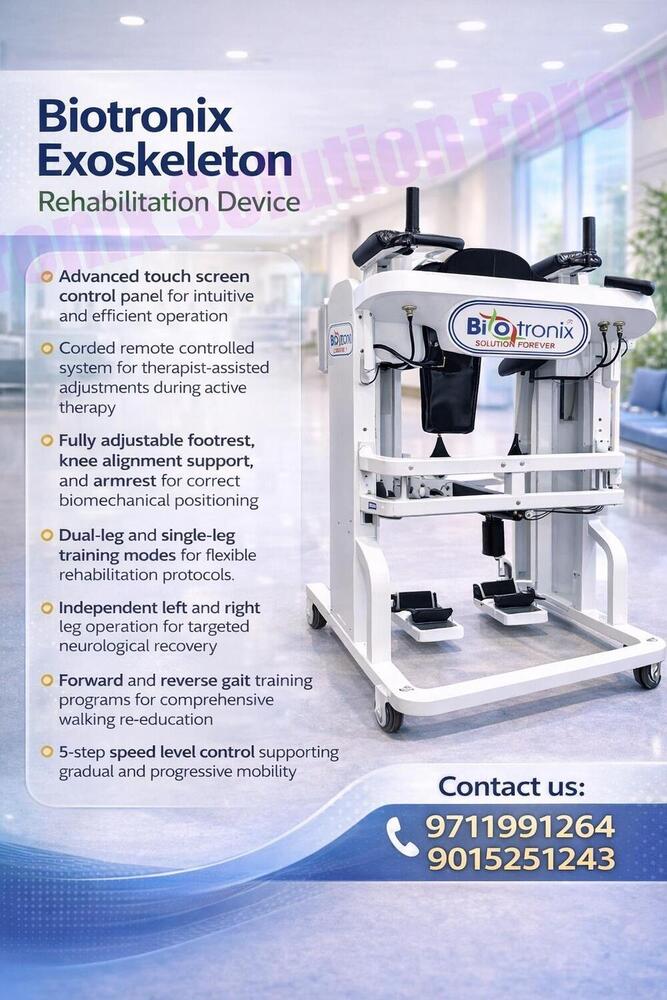
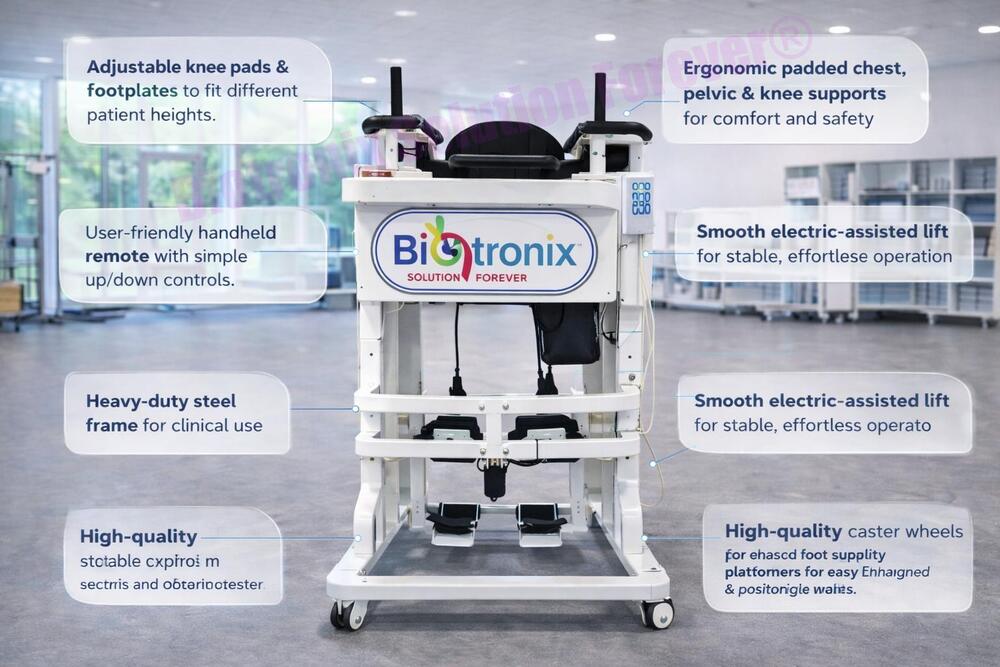
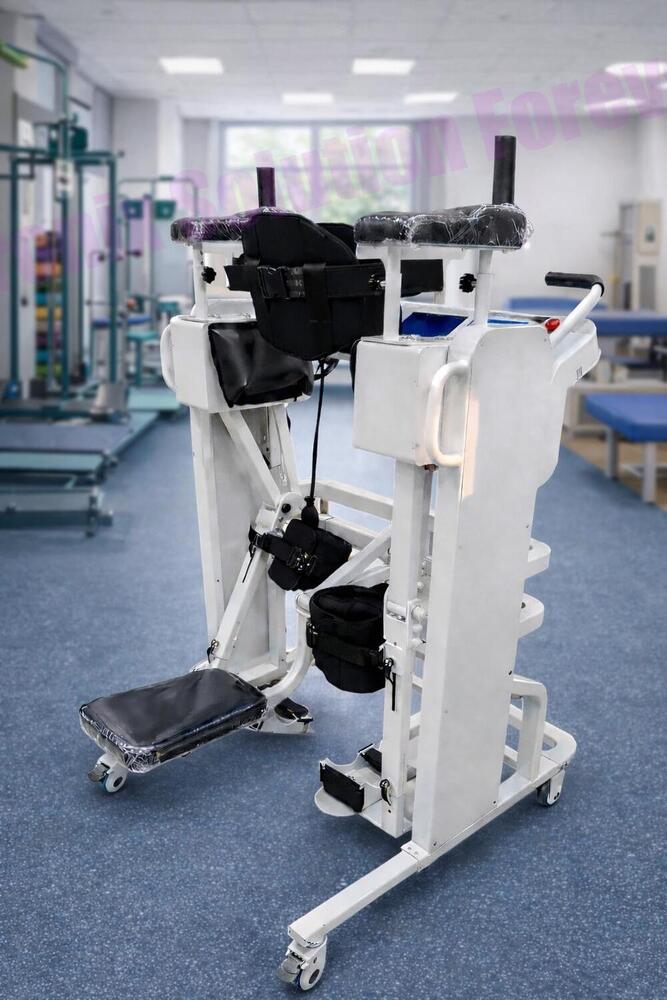
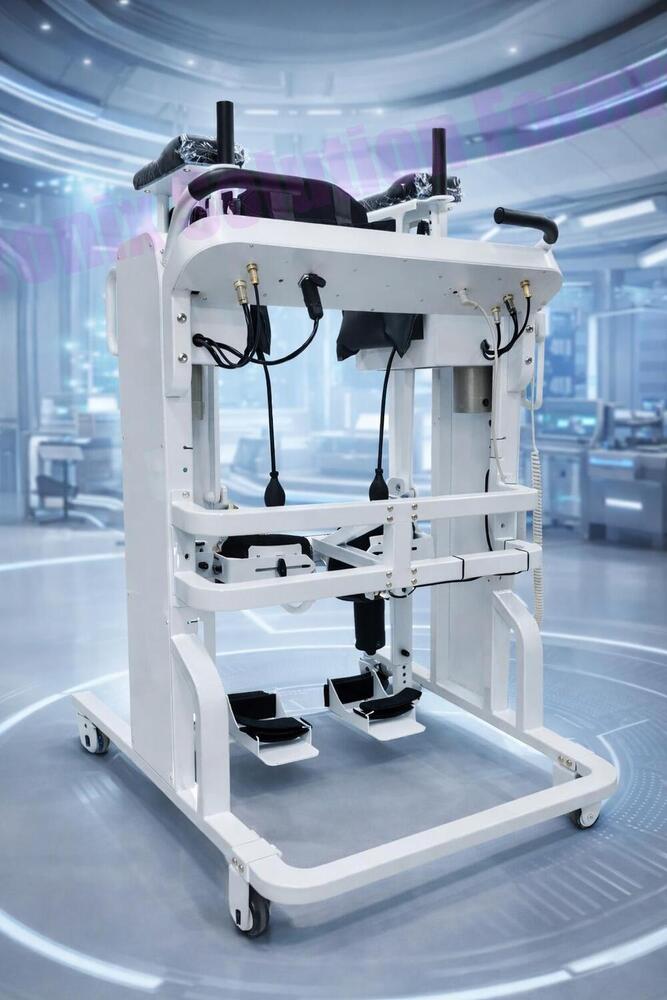
Advanced Assistance for Lower Limb Rehabilitation

This exoskeleton is engineered specifically for lower limb therapy. By integrating AI-driven analytics and digital robotics, the device enhances rehabilitation outcomes for individuals recovering from neurological injuries, surgeries, or mobility impairments. The technology ensures accurate, adaptive support, helping users regain natural gait patterns and strength efficiently.


User-Friendly Design and Versatile Functionality

With medical-grade plastics and intuitive touch-screen controls, this wearable exoskeleton offers ease of use for hospitals, rehabilitation centers, and personal home therapy. Its portable and lightweight construction allows seamless movement, and the system accommodates a wide range of users, from children to elders, ensuring inclusive and effective therapy.


Smart, Real-Time Therapy Monitoring

Thanks to AI technology and real-time feedback, therapists and users can monitor progress instantly. The exoskeleton provides data-backed insights into rehabilitation performance, allowing for adjustments tailored to each patient's unique mobility needs and ensuring optimal recovery trajectories.

FAQ's of Wearable Exoskeleton Devices for Assisted Strength Training:


Q: How does the wearable exoskeleton assist in strength training and mobility recovery?

A: The exoskeleton uses AI-driven sensors and digital robotics to provide targeted support to the lower limbs. This assists patients in performing strength training exercises and gait training, helping to restore mobility and muscular function after injury, stroke, or surgery.

Q: What conditions and body areas is this exoskeleton recommended for?

A: It is suitable for individuals requiring rehabilitation of the shoulders, joints, cervical, back, muscles, and nerves. Common applications include neurorehabilitation, stroke recovery, and mobility support for various age groups, from infants to elders.

Q: Where can the exoskeleton be used for therapy sessions?

A: This device can be used in hospital physiotherapy departments, clinical rehab centers, and homecare environments due to its portable design and user-friendly controls. It is also appropriate for assisted exoskeleton physiotherapy in specialized outpatient settings.

Q: What is the process for using this exoskeleton in rehabilitation?

A: Therapists or users fit the exoskeleton onto the patient's lower limbs, calibrate the system using the touch-screen display, and program therapy sessions as needed. Real-time monitoring and AI adjustments ensure protocols match the individual's rehabilitation goals.

Q: When is it safe and most effective to use this exoskeleton during recovery?

A: It is best used following a clinician's recommendation during the active recovery phase post-injury or surgery, or whenever strength training and gait rehabilitation are necessary. Continuous use as part of a prescribed therapy plan yields optimal results.

Q: What benefits does the exoskeleton offer for clinical and home rehabilitation?

A: The device provides personalized, data-driven support, improves mobility outcomes, and encourages engagement through interactive therapy. Its portability and user-centric design benefit both professionals and patients by enabling consistent, effective rehabilitation sessions.

Q: How should the exoskeleton be stored and maintained after use?

A: Store the device in a clean, dry medical environment as per the provided hospital physiotherapy equipment storage instructions. Regular maintenance should be conducted according to manufacturer guidelines to ensure longevity and optimal performance.

Tell us about your requirement
product

Price:

Quantity
Select Unit

  • 50
  • 100
  • 200
  • 250
  • 500
  • 1000+
Additional detail
Mobile number

Email

More Products in Physiotherapy Equipment Category

Konmed KM-560 Pelvic Floor EMG Biofeedback Machine

Konmed KM-560 Pelvic Floor EMG Biofeedback Machine

Price 20000 INR / Piece

Minimum Order Quantity : 1 Piece

Lighting Type : Muscle Stimulator Biofeedback Device

Function : Standard EMG Test (muscle activity assessment) Quick EMG Assessment (fast screening mode) EMG Biofeedback Training & Interactive Gaming

Dimension (L*W*H) : 15, 20, 25 Inch (in)

Age Group : Elders, Infants, Children, Adults, Women

Digital Neuro Therapy Equipment tDCS tACS tVNS tPCS

Digital Neuro Therapy Equipment tDCS tACS tVNS tPCS

Price 55000 INR / Piece

Minimum Order Quantity : 1 Piece

Lighting Type : non invasive brain stimulation system

Function : tDCS (Direct Current Stimulation) tPCS (Pulsed Current Stimulation) tACS (Alternating Current Stimulation) tVNS (Transcutaneous Vagus Nerve Stimulation)

Dimension (L*W*H) : 10, 6, 20 Inch (in)

Age Group : Elders, Infants, Children, Adults, Women

Pelvic Floor Therapy Device KM-533-4 with Wireless App Support

Pelvic Floor Therapy Device KM-533-4 with Wireless App Support

Price 25000.0 INR / Piece

Minimum Order Quantity : 1 Piece

Lighting Type : smart pelvic floor trainer

Function : RealTime Visual, Digital & AppBased Biofeedback

Dimension (L*W*H) : TravelFriendly Design Inch (in)

Age Group : Children, Adults, Women, Elders, Infants

Phymaster Shockwave Physiotherapy Device for Clinical Rehabilitation

Phymaster Shockwave Physiotherapy Device for Clinical Rehabilitation

Price 20000 INR / Piece

Minimum Order Quantity : 1 Piece

Lighting Type : Phymaster ESWT Device Manufacturer

Function : Advanced Radial Shockwave Therapy System

Dimension (L*W*H) : Shockwave Therapy Equipment for Rehab Centers Inch (in)

Age Group : Children, Adults, Women, Elders, Infants